
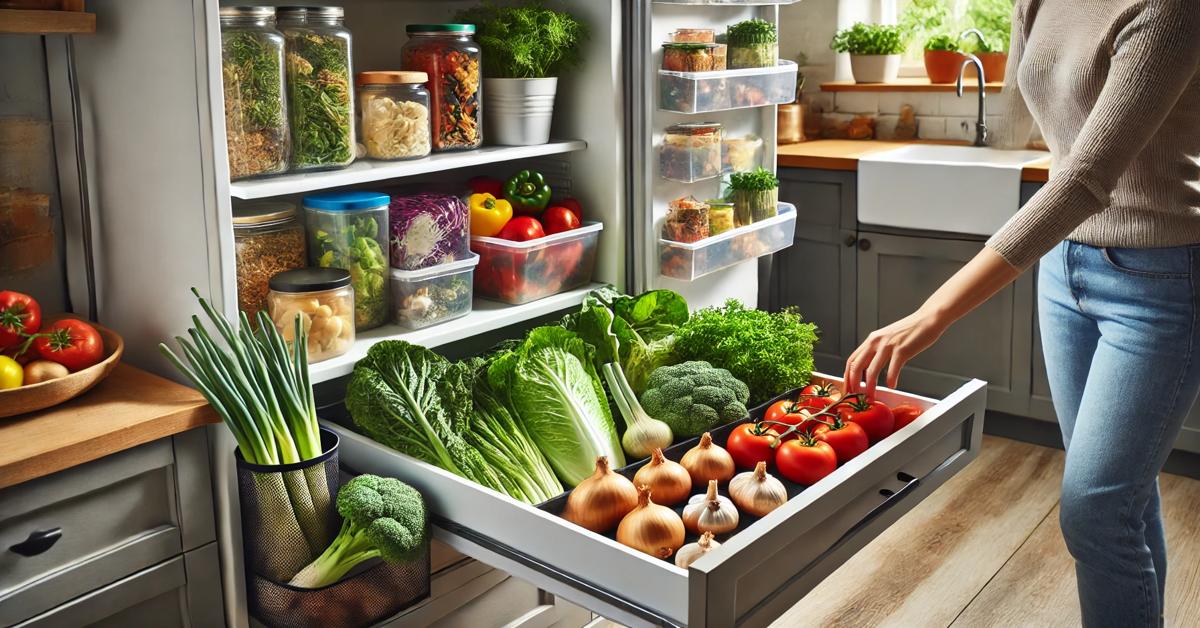
Storing vegetables correctly is crucial to maintaining their freshness, flavor, and nutritional value. Different types of vegetables require different storage methods to stay crisp and delicious for as long as possible. Here’s a guide on how to store various vegetables properly, so you can make the most out of your produce and reduce food waste.
1. Storing Leafy Greens (Lettuce, Spinach, Kale)
Leafy greens are prone to wilting and should be stored in a way that maintains their moisture without making them soggy.
- Method:
Rinse the greens under cold water and pat them dry with a paper towel. Place them in a container or plastic bag lined with paper towels to absorb excess moisture. Store the container in the refrigerator’s crisper drawer, which is designed to maintain high humidity levels ideal for leafy greens. - Pro Tip:
Add a dry paper towel to the container to absorb additional moisture, which helps prevent wilting and extends freshness.
2. Storing Root Vegetables (Carrots, Potatoes, Beets)
Root vegetables need a cool, dark, and dry environment to prevent them from sprouting or becoming soft.
- Method:
Remove any leafy tops (like carrot greens) and store the vegetables in a paper bag or perforated plastic bag to allow airflow. Keep them in a cool, dark place like a pantry, cellar, or a dedicated vegetable drawer in the refrigerator. - Pro Tip:
Avoid storing potatoes and onions together as they produce gases that can cause each other to spoil more quickly.
3. Storing Tomatoes
Tomatoes are sensitive to cold temperatures, which can affect their texture and flavor.
- Method:
Store ripe tomatoes at room temperature, away from direct sunlight, with the stem side down. If they become overripe, you can move them to the refrigerator to slow down the ripening process. - Pro Tip:
To maximize flavor, bring refrigerated tomatoes back to room temperature before using them.
4. Storing Cruciferous Vegetables (Broccoli, Cauliflower, Cabbage)
Cruciferous vegetables need a cold environment to stay fresh and crisp.
- Method:
Store broccoli and cauliflower unwashed in the refrigerator’s crisper drawer, preferably in a perforated plastic bag or wrapped in a damp paper towel. Cabbage can be stored whole, in a plastic bag in the refrigerator. - Pro Tip:
Use broccoli and cauliflower within a few days of purchase to enjoy their best texture and flavor.
5. Storing Peppers and Cucumbers
Peppers and cucumbers should be stored in a slightly cool environment but not too cold.
- Method:
Store peppers and cucumbers in the refrigerator’s crisper drawer. Place them in a plastic bag to retain moisture, but make sure there is some airflow to prevent condensation and rotting. - Pro Tip:
Keep cucumbers away from ethylene-producing fruits like apples and bananas, which can cause them to spoil faster.
6. Storing Onions and Garlic
Onions and garlic need a dry, well-ventilated environment.
- Method:
Store onions and garlic in a cool, dark place, like a pantry or cellar. Keep them in a mesh bag or a basket that allows air circulation. Avoid refrigerating onions and garlic, as moisture can cause them to become soft or moldy. - Pro Tip:
Do not store onions and potatoes together, as this can cause them to spoil faster.
7. Storing Squash and Pumpkins
Squash and pumpkins are best stored in a cool, dry place.
- Method:
Keep them in a single layer in a pantry or a cool, dry basement. Make sure they are not touching each other, as this can promote rotting. - Pro Tip:
Check stored squash and pumpkins regularly for soft spots or signs of decay, and remove any damaged ones immediately to prevent spoilage of the rest.
8. Storing Fresh Herbs
Fresh herbs can wilt quickly, so storing them properly is key to keeping them usable for longer.
- Method:
For soft herbs like parsley, cilantro, and basil, trim the stems and place them in a glass of water, like a bouquet, and cover them loosely with a plastic bag. Store them in the refrigerator, except for basil, which should be stored at room temperature. For hardy herbs like rosemary and thyme, wrap them in a damp paper towel and store them in a plastic bag in the fridge. - Pro Tip:
Change the water for soft herbs every few days to keep them fresh.
Conclusion
Properly storing vegetables is essential for preserving their freshness, flavor, and nutritional value. By following these storage tips, you can extend the life of your vegetables, reduce food waste, and always have fresh produce on hand for your meals.
Need help keeping your kitchen organized and clean? Contact Natly Services, based in Northamptonshire, for professional home cleaning services! Visit natlyservices.uk/contact or email us at contact@natlyservices.uk.