Keeping your children’s toys clean is essential for maintaining a healthy home environment. Toys can quickly become breeding grounds for germs, bacteria, and allergens, especially when they are frequently touched or shared among kids. Here are some effective ways to clean your children’s toys to ensure they stay safe and hygienic.
1. Cleaning Hard Plastic Toys
Hard plastic toys are relatively easy to clean and disinfect.
- Dishwasher Method: If the toys are dishwasher-safe, place them on the top rack and run a gentle cycle with mild detergent. This method is ideal for non-electronic toys and helps sanitize them using hot water.
- Soak in Soapy Water: For toys that cannot go in the dishwasher, prepare a solution of warm water and mild dish soap in a basin. Soak the toys for 10-15 minutes, then scrub with a brush to remove dirt. Rinse thoroughly with clean water and air dry.
Pro Tip: Disinfect toys by wiping them with a solution of water and vinegar or an alcohol-based sanitizer after washing to ensure they are germ-free.
2. Cleaning Plush Toys
Soft, plush toys can harbor dust mites and allergens. Regular cleaning is important to keep them fresh and safe for your child.
- Machine Wash: Check the care label first. Most plush toys can be cleaned in a washing machine. Use a gentle cycle with mild detergent and place the toy in a laundry bag for added protection. Air dry or tumble dry on low heat.
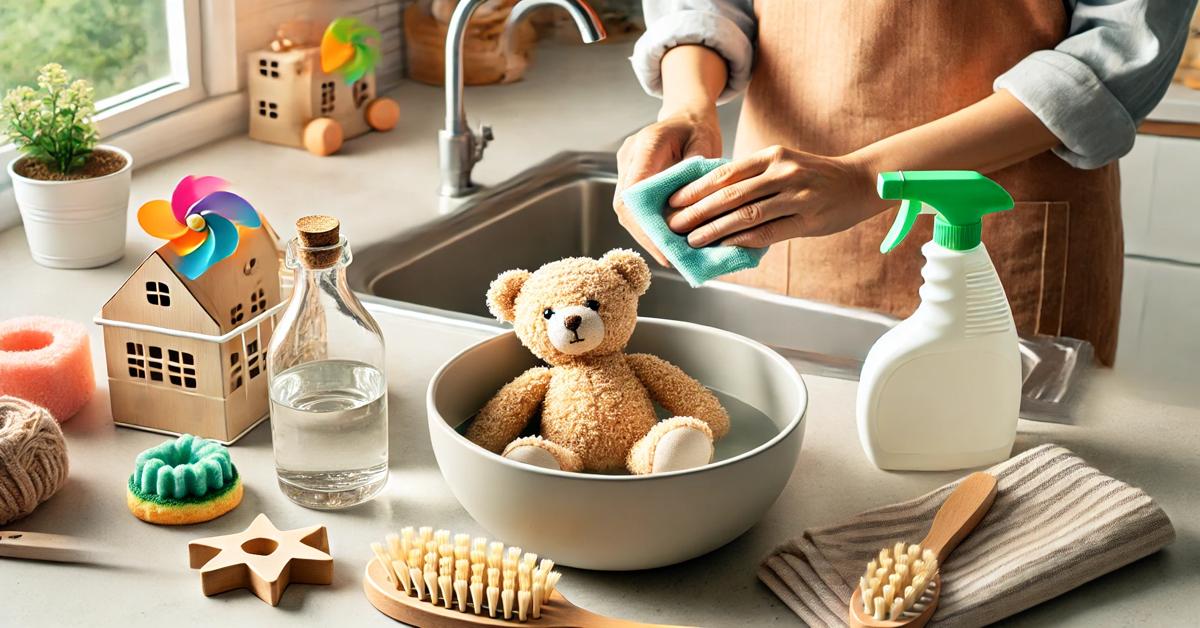
- Hand Wash: For delicate toys, fill a sink or basin with lukewarm water and add a small amount of gentle detergent. Gently agitate the water to remove dirt, rinse with clean water, and squeeze out excess water. Air dry thoroughly.
Pro Tip: For extra freshness, sprinkle baking soda on plush toys, let sit for 15 minutes, and then vacuum to remove odors.
3. Cleaning Wooden Toys
Wooden toys are porous and can’t be submerged in water, but they still need regular cleaning to remain safe.
- Wipe with a Damp Cloth: Use a damp cloth with mild soap to gently wipe down the wooden toys. Avoid soaking or immersing them in water as it can cause damage or warping.
- Disinfect with Vinegar Solution: Mix equal parts of water and vinegar in a spray bottle, lightly mist the toys, and wipe them dry with a clean cloth. Vinegar acts as a natural disinfectant.
Pro Tip: Avoid using harsh chemicals or bleach on wooden toys, as these can damage the finish or harm your child if ingested.
4. Cleaning Electronic Toys
Electronic toys require special care to ensure they are both clean and in working condition.
- Surface Wipe: Use a disinfectant wipe or a cloth dampened with a water and vinegar solution to wipe down the surface. Be careful not to get any liquid into the battery compartments or electronic parts.
- Compressed Air: Use compressed air to blow out dust and debris from small crevices or speakers.
Pro Tip: Remove batteries before cleaning to avoid damage and ensure the toy is safe to use.
5. Regular Cleaning Routine
Establish a routine for cleaning your children’s toys, especially those frequently used or shared with other children. Clean toys at least once a week or immediately after any illness to prevent the spread of germs.
Pro Tip: Keep a small bin for “toys to clean” and regularly rotate toys in and out of use, giving you time to clean them thoroughly.
Conclusion
Regularly cleaning your children’s toys is crucial for their health and well-being. By following these effective methods, you can keep your child’s playthings safe, fresh, and ready for their next adventure!
Need a hand with more than just toys? Contact Natly Services (Northamptonshire) today for professional home cleaning solutions! Visit natlyservices.uk/contact or call us at 07547618624.